Research has demonstrated that circulating MOTS-c levels decline with age in humans. Some users dose 3–5 times per week rather than daily, particularly at higher doses. The exact pharmacokinetic half-life of exogenous MOTS-c in humans has not been precisely characterized in published literature. In animal studies, MOTS-c prevented diet-induced obesity and insulin resistance even on high-fat diets. In animal studies, MOTS-c improved exercise capacity and endurance performance. Higher doses increase cost significantly without established additional benefit.
The rationale for combining these two compounds is based on the notion that they largely utilize complementary mechanisms instead of overlapping ones. What distinguishes this three-pronged mechanism from compounds such as semaglutide, which targets only GLP-1 receptors, is its unique design. Instead (some individuals choose to combine retatrutide with tesamorelin), and this pairing is addressed in the context of tesamorelin versus retatrutide. Each compound has shown significant data in initial trials when considered individually; however, there is a growing trend among researchers to combine them in a stack aimed at addressing fat loss and metabolic dysfunction from various biological perspectives concurrently. Certain mitochondrial DNA variants that impact MOTS-c seem to be more prevalent in populations known for their longevity. Currently, the metabolic evidence remains preclinical, and findings in animal studies frequently do not have direct applicability to humans.
In the 2021 Reynolds study, ten young men performed stationary-cycle exercise while The MOTS-c Peptide researchers measured naturally occurring MOTS-c in muscle and blood. Those findings justify further study; they do not establish that adding an external product to a person reproduces the same effects. Lee and colleagues reported effects on metabolic pathways, including AMPK signaling, and protection against insulin resistance and diet-induced obesity in mice. This is one reason researchers describe MOTS-c as part of the body’s exercise response. User reports are mixed and often involve other compounds at the same time.
Evidence from Humans: Scarce yet Consistently Aligned in Direction.

The frequently discussed MOTS-c dosing regimen in research planning involves administering 5 mg subcutaneously, 2 to 3 times a week for a duration of 4 to 8 weeks. In settings supervised by physicians and during research (MOTS-c is typically dosed at 5–10 mg subcutaneously), 3–5 times a week, following a titration period of 2–4 weeks starting at approximately 2.5–5 mg. Although these subjective markers aid in contextualizing laboratory trends, they should not independently dictate dosage.
Body-composition shifts described in animal protocols may begin to show up in humans, though without published RCT confirmation. Fatigue is sometimes addressed by lower doses or morning timing in reported use. The U.S. Anti-Doping Agency monograph and clinician sources cited by Innerbody describe a small, mostly mild side-effect pattern in people who buy MOTS-c online. MOTS-c is studied in metabolic health, exercise performance, and aging research. The authors compared the metabolic profile to the diabetes drug metformin, but stopped short of saying the two are interchangeable. The math below uses a 10 mg vial because that is the most common size for research-grade MOTS-c.
Circulating MOTS-c levels are lower in older adults (lower in people with insulin resistance), and rise acutely in response to high-intensity exercise . MOTS-C activates the same pathway, leading researchers to describe it as an exercise mimetic. MOTS-c is commonly stacked with BPC-157 , for combined metabolic and tissue repair support,, AOD-9604 (for complementary fat metabolism through different pathways), and growth hormone secretagogues like sermorelin or ipamorelin (for combined metabolic and anabolic effects). StudyYearModelKey findings Lee et al. (Cell Metabolism)2015MiceMOTS-c activates AMPK — prevents age-related insulin resistance, reduces diet-induced obesity. The researchers demonstrated that MOTS-c activates AMPK — the enzyme that cells activate during energy stress , exercise, fasting, caloric restriction, — and that exogenous MOTS-c administration in mice prevented age-related insulin resistance, reduced obesity on a high-fat diet, and improved overall metabolic function. Some longevity researchers view MOTS-C as a more targeted, peptide-based alternative to metformin’s metabolic effects.
There is a lack of long-term studies involving humans, no data regarding drug interactions, and no characterization of effects in individuals with pre-existing metabolic disorders. Reported adverse effects tend to be mild and mainly localized, with injection-site irritation being the most common, while fatigue or headaches related to dosage appear less frequently. Complaints associated with dosage — particularly fatigue and headaches, tend to cluster towards the higher end of the dosage range rather than the lower end. The standard vial size is ten milligrams, representing the upper limit of the reported range rather than a more potent version of the compound.

MOTS-c is a peptide that has generated growing interest among longevity researchers (biohackers), and clinicians for its proposed role in metabolic regulation. Here’s an honest clinical overview of what MOTS-c is (what it has actually been studied for), why its evidence base is still early and largely preclinical, and the regulatory realities every provider needs to understand. Individual results vary; treatments discussed may be investigational (off-label), or not approved by the FDA for all stated uses.
The One Human Trial
MOTS-c is usually discussed in mitochondrial and metabolic research. MOTS-c and metformin share an AMPK link but are not interchangeable. See SS-31 protocol.Metformin , drug, not peptide,AMPK activator, among other effects.FDA-approved for type 2 diabetes; widely studied for healthy aging.FDA-approved prescription drug. FDA-approved for type 2 diabetes; widely studied for healthy aging.
Findings from preclinical (observational), and clinical studies are distinctly labeled. A peptide consisting of 16 amino acids encoded in mitochondrial DNA has been investigated for its roles in metabolism (insulin sensitivity), exercise capacity, and promoting healthy aging.
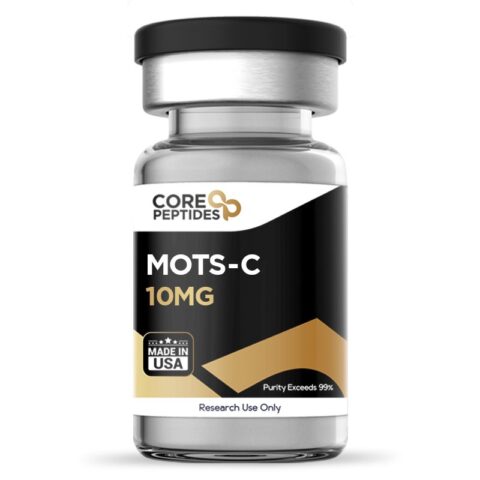
This has led some to compare MOTS-c to metformin. Those compounds have far more clinical data supporting their use. Placing MOTS-c among similar compounds aids in clarifying when its relevance may be at its peak. The guide to common peptide mistakes outlines errors that elevate risk with any compound.
Subcutaneous injection, which occurs under the skin, is the method utilized in both animal studies and reported research protocols. It discusses the most frequently mentioned protocol structure for MOTS-c (straightforward reconstitution calculations), and delineates what the published evidence indicates and does not indicate. The most extensively studied effect is its activation of a protein known as AMPK — which functions as a critical energy regulatory switch within cells. It is unsuitable for individuals who are pregnant, breastfeeding, tested athletes, or those with uncontrolled medical conditions. The primary action that has been studied the most is the activation of AMPK (which serves as the energy sensor in cells), leading to increased glucose uptake and fat oxidation, the same pathway that exercise stimulates.